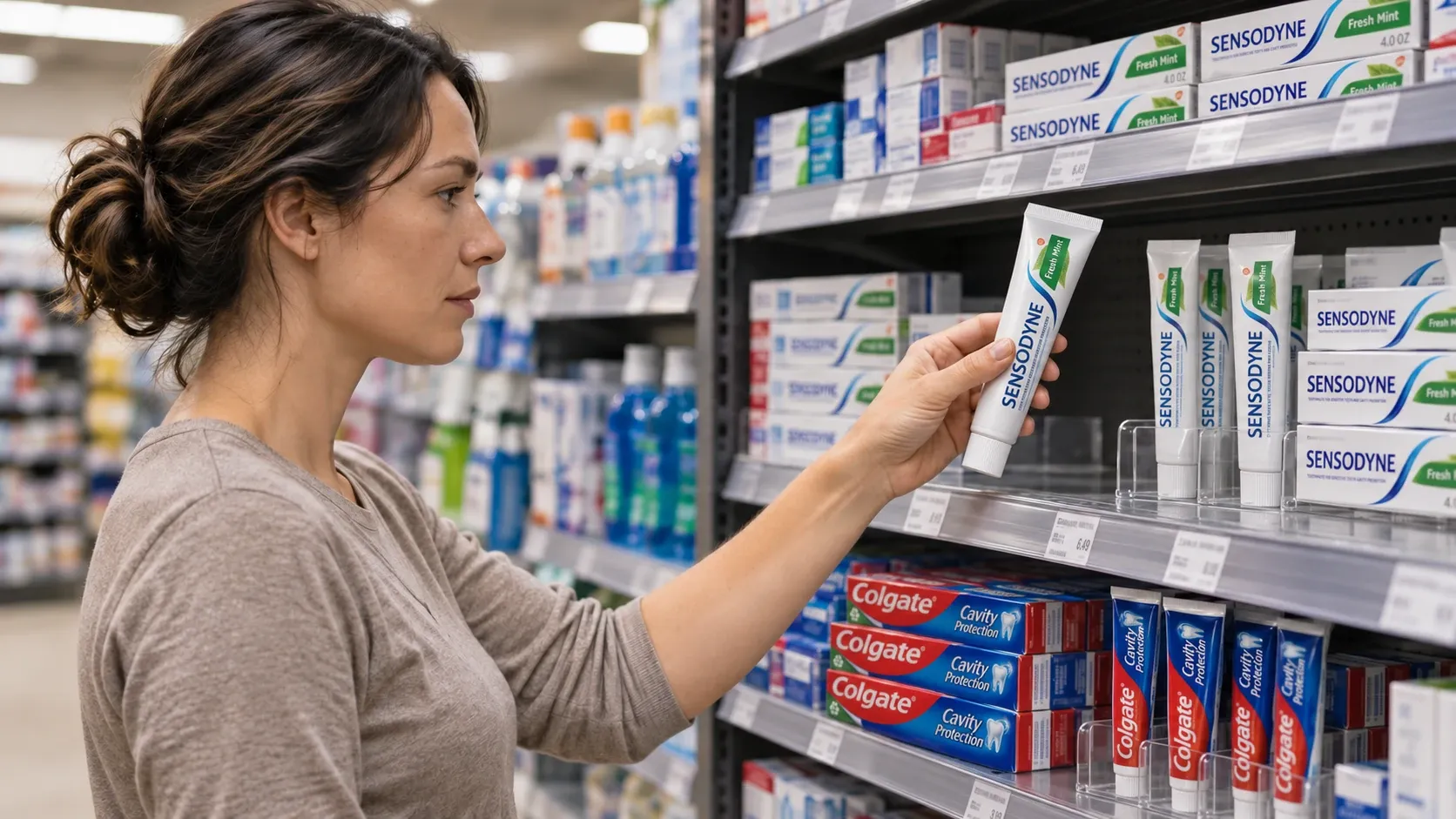
A toothpaste can catch your eye on a shelf and still leave you reconsidering your choice after the first brush.
Imagine choosing one because you like the packaging and the benefits it describes fit your needs. You open it and notice an interesting aroma. During brushing, though, the cooling sensation is stronger than you expected, and the aftertaste stays longer than you would like. Someone else might enjoy exactly those qualities.
Does what makes us want to buy a toothpaste also make us want to use it?
Aroma, taste, effectiveness and design can all enter that decision. Understanding their roles means looking at both the expectations we bring to a product and what happens when we use it.
1. What are we expecting before we buy?
When choosing a toothpaste for the first time, we can only imagine much of the experience. Packaging, product claims, flavour descriptions and the brand give us clues. Price and familiarity may also influence the choice.
A toothpaste presented as gentle, for example, might lead you to expect a mild aroma and cooling sensation. An unusual flavour might make you curious. Those expectations depend partly on experience: the same design will not necessarily suggest the same sensations to everyone.
A study of eight commercial toothpastes involving 160 participants examined acceptability and purchase intention under blind and informed conditions. Its findings pointed to roles for price, brand and label information alongside flavour. The outcome was purchase intention, rather than a record of actual purchases. Study abstract
For someone who has used the product before, the packaging may bring back a familiar taste or brushing experience. Using a product can inform the next buying decision. Appearance and sensory experience do not belong to separate, fixed stages.
2. Toothpaste taste and texture: what changes with use?
Opening the cap introduces the aroma. During brushing, taste, cooling, foam and the texture of the paste become part of the experience. Afterwards, an aftertaste or a particular feeling in the mouth may remain noticeable.
Liking the smell and enjoying the brushing experience are worth considering separately. An aroma may seem appealing while the sweetness is different from what you expected. A strong cooling sensation may be striking at first, yet stronger than you want every day.
It helps to describe toothpaste flavour and mouthfeel more precisely than simply calling them good or bad. Is the taste too sweet, or is there a bitter aftertaste? Do you like a pronounced cooling effect, or prefer something milder? Is the paste's texture uncomfortable, or is the foam distracting?
These questions make individual preferences easier to understand. Greater intensity or novelty does not automatically mean greater appeal.
When the question is what makes toothpaste appealing during use, aroma and mouthfeel deserve close attention. They turn a description on the pack into something the user can experience directly.
3. Does a pleasant feeling mean better effectiveness?
If a particular functional need led someone to choose a toothpaste, that need still matters after the packaging is opened.
When considering toothpaste benefits, it helps to distinguish three things: what the product claims to do, how it feels during use, and what the relevant evidence supports. Strong cooling, a pronounced aroma or abundant foam cannot, on their own, demonstrate cavity prevention or another finished-product benefit.
The American Dental Association's toothpaste information describes different roles for active ingredients, detergents and flavouring agents. Its Seal of Acceptance programme also evaluates safety and efficacy data. Sensory impressions and evidence of effectiveness therefore need separate consideration. ADA toothpaste information
For product development, the practical question is how to meet the applicable functional and evidence requirements while creating a taste, texture and way of using the product that its intended users can accept.
4. Toothpaste packaging design matters after purchase, too
Design continues to play a part when the product reaches the bathroom.
Is the tube comfortable to hold? Is the cap convenient to open and close? Can the user control how much paste comes out? Is the opening easy to keep clean? These are observable details that an attractive appearance cannot answer by itself.
In a study by Colgate-Palmolive researchers, 27 panellists evaluated the squeezability of eight modified toothpaste samples. Within that set, both excessive squeezing effort and paste that came out too easily to control were undesirable. Squeezability study
This small study concerned a particular set of samples and testing conditions. It offers a concrete reason to consider how the paste and its packaging work together in use; it does not establish the effect of every packaging feature.
Evaluating design can therefore extend from how the product looks on a shelf to how it feels in the hand and behaves during brushing preparation.
5. What makes someone want to keep using it?
Which matters most: aroma, taste, effectiveness or design? The answer starts with who is choosing and what that person needs.
One person may first look for a product that meets a functional requirement. Another may know what they need and want a flavour they enjoy more. Someone else may become interested because of the design, then decide through use whether the product suits them.
For the desire to use it, a more specific question is useful: do the other parts of the product support the feature that first made it appealing?
If the promise is a mild, comfortable experience, consider whether the aroma, cooling, aftertaste and handling fit that expectation. If a functional benefit is the main reason for choosing it, clear information and appropriate evidence remain essential, alongside attention to the user's experience.
Enjoying a product once, wanting to keep using it and actually buying it again are different outcomes. Price, availability and established habits may also enter later decisions.
For brands developing toothpaste, two questions belong together: why would someone choose this product for the first time, and what would make them feel it suits them once they begin using it?
Understanding the connection between those answers helps bring flavour, functional benefits and design together around the intended user.
Ready to develop your oral care product?
Share your product idea, target market and packaging preferences. Our team can help you clarify the development brief and next steps.
Discuss your project